The Revival Is Happening Now
The strongest kilt-wearing culture in the world is no longer in Scotland alone. It is thriving among the diaspora too, in the games fields and family gatherings of a country Scotland's people helped build — and that is worth understanding before you commission anything.
There is a question worth asking before commissioning any garment that claims a tradition, and it is not the one most men ask. The usual question is whether a thing is authentic. The better question is who is currently keeping it alive, and whether they are doing it well.
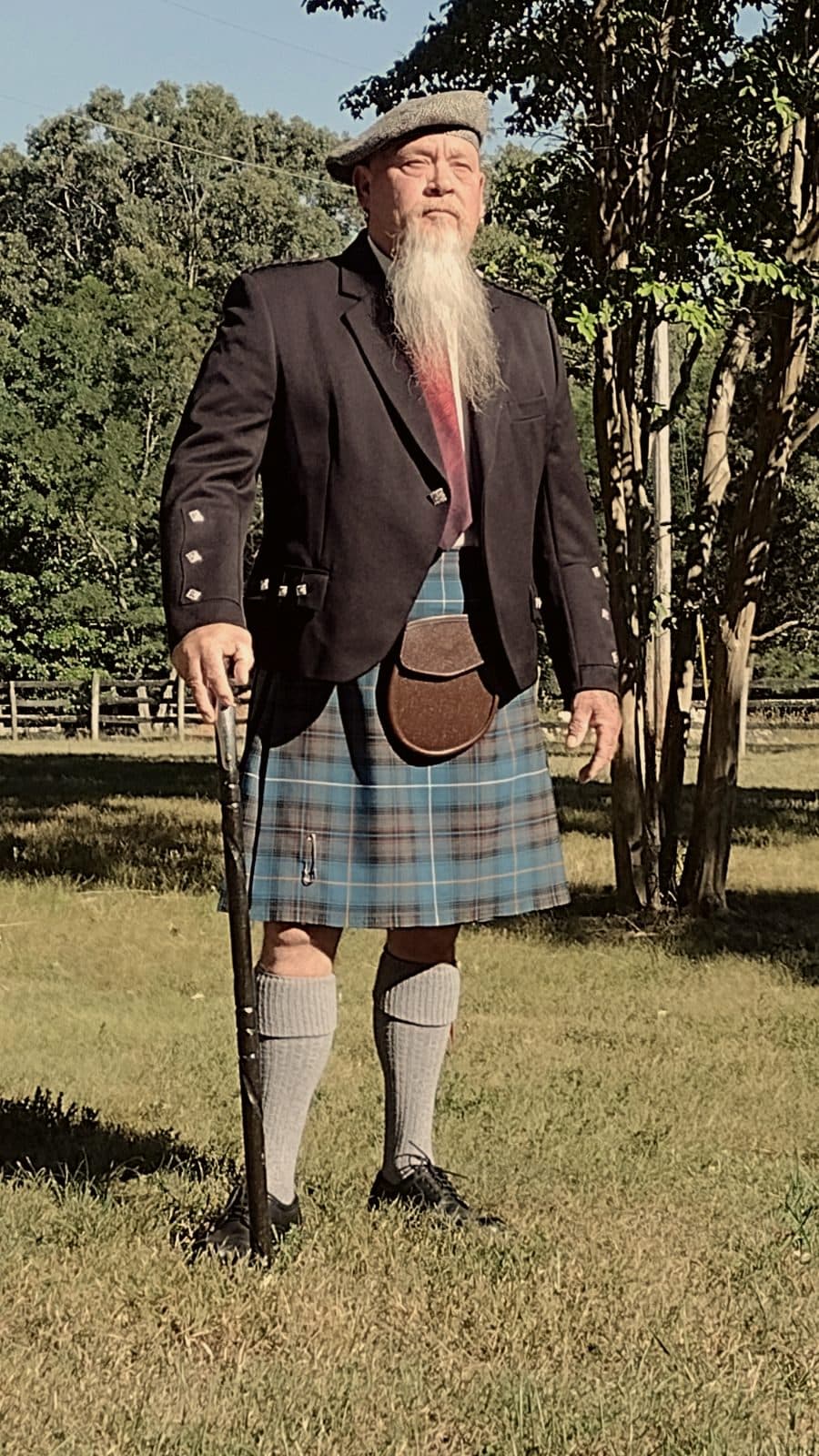
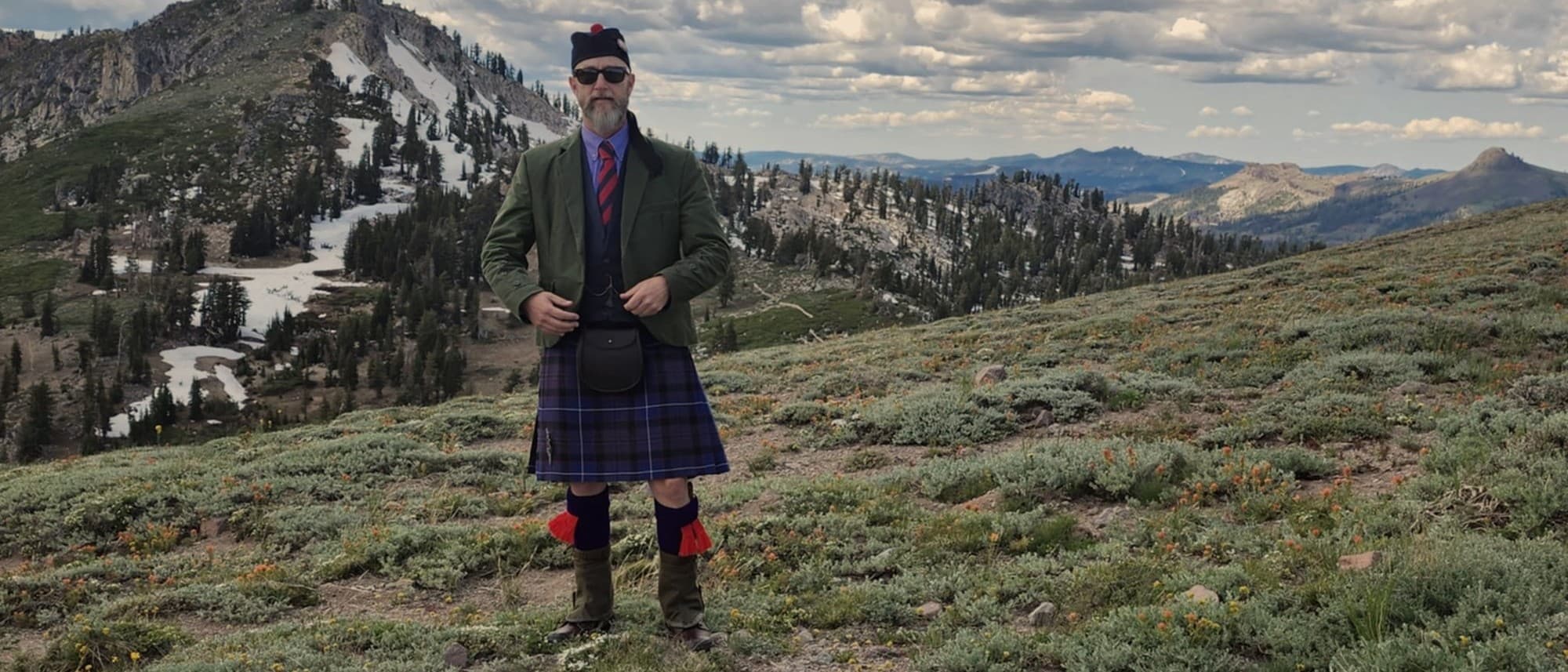
For Highland dress, the encouraging answer is that the people keeping it alive are spread wider than most men assume — a long way from Scotland as often as not, and a good many of them have never been. That is not a lesser version of the tradition. It is the tradition finding new ground.
It is the most encouraging thing to happen to Highland dress in about two hundred years, and it is worth explaining why.
What is actually at risk
The crafts underneath Highland dress have thinned out badly. Hand kilt-making, bonnet blocking, sporran work, and the small leather and silver trades that finish an outfit have all been flagged in surveys of endangered British crafts, for the reason such crafts usually decline: not because demand vanished, but because the number of people who can teach the work fell faster than the number who want to learn it. A craft does not die when its last customer leaves. It dies when its last master retires without an apprentice.
That is the honest starting point for anything sold as heritage. The garment matters less than the hands that can still make it properly, and those hands are getting scarcer everywhere the tradition lives — Scotland included.
A tradition that has always grown
It also helps to understand how the tradition got to where it is, because it did not arrive all at once. Highland dress has been reshaped by the people wearing it more than once, and each reshaping is part of the story rather than a break from it.
The small kilt, the tailored garment nearly everyone now means by the word, was practical clothing before it was ever ceremonial dress — simplified for hard physical labor in the Highlands, long before it stood for anything else.
The pairing of a particular sett with a particular family came later still, and it arrived at an interesting moment. Highland dress was restricted by law in the mid-eighteenth century, the same period the old clan structure was being dismantled. When the ban lifted and tartan returned, Scotland did something remarkable with it: weavers, antiquarians and a wave of national pride turned it into a proper institution, cataloguing setts and giving families a pattern to call their own. A royal visit to Edinburgh in the early nineteenth century, one of the great civic occasions of the era, helped carry tartan from a regional cloth into a national costume worn with pride across the country.
Knowing the timeline doesn't make a family's sett any less worth wearing. It means the tradition was built with real intention, by people who cared enough to make it last — and that a man wears his sett today for the same reason: because it means something to him.
So the thing being revived was never a museum piece handed down untouched. It was always a living practice, shaped with care by the people who kept it going. Which is exactly why it is still worth shaping today.
Why the diaspora turns out to matter
Somewhere between eleven and thirty million people claim Scottish descent depending on how the question is asked, and the overwhelming majority of them live in North America, Australia and New Zealand. They are the reason a Highland games circuit exists in Ohio and Tennessee and North Carolina at all. Scotland's own tradition is still very much alive, and this is not a case of one place replacing the other — it is the same tradition now rooted in two homes at once, each keeping different parts of it strong.
This trade still runs on that circuit rather than on advertising. Forty or more gatherings a season, a table, a tent, and several hundred conversations with men who came to watch the heavy events and stayed to ask what the difference is between one kilt and another. It is slow, it is unglamorous, and it is the most reliable form of business development anyone in this trade has found.
What is different about that audience is what it is buying for. A man at a games in East Tennessee is not dressing for one Saturday. He is buying something he intends to own, wear repeatedly, and eventually hand on. That single fact changes what is worth making. It justifies hand finishing. It justifies heavier cloth and a properly canvassed waistband. It justifies a fitting call, because a garment worn once can be approximately right and a garment worn for thirty years cannot.
A garment worn once can be approximately right. A garment worn for thirty years cannot.
The case for choosing your own cloth
Here is the practical case, and it is the one that persuades most men once they hear it stated plainly.
Scotland is a cool, wet, maritime country with a narrow temperature range. Heavy worsted wool is a sensible answer to that climate and has been for centuries. Most of the American South is not that country. A sixteen ounce kilt at a games in July in Tennessee or Georgia asks a lot of the man wearing it, for no reason rooted in tradition — it is simply the weight that suits a different climate, worn somewhere it was never designed for.
There is no historical principle that forbids a lighter cloth, a different weave, or a fabric chosen for the summer a man actually lives through. The Highlanders who wore these garments made exactly those decisions constantly, according to what they had and what the weather did. Honoring their reasoning, not just their specific choices, is the more faithful way to carry the tradition forward.
The diaspora is well placed to make that call precisely because it has the affection for the thing without the deference. It can ask why a garment is made a particular way and expect an answer, not just a custom.
What follows from all this
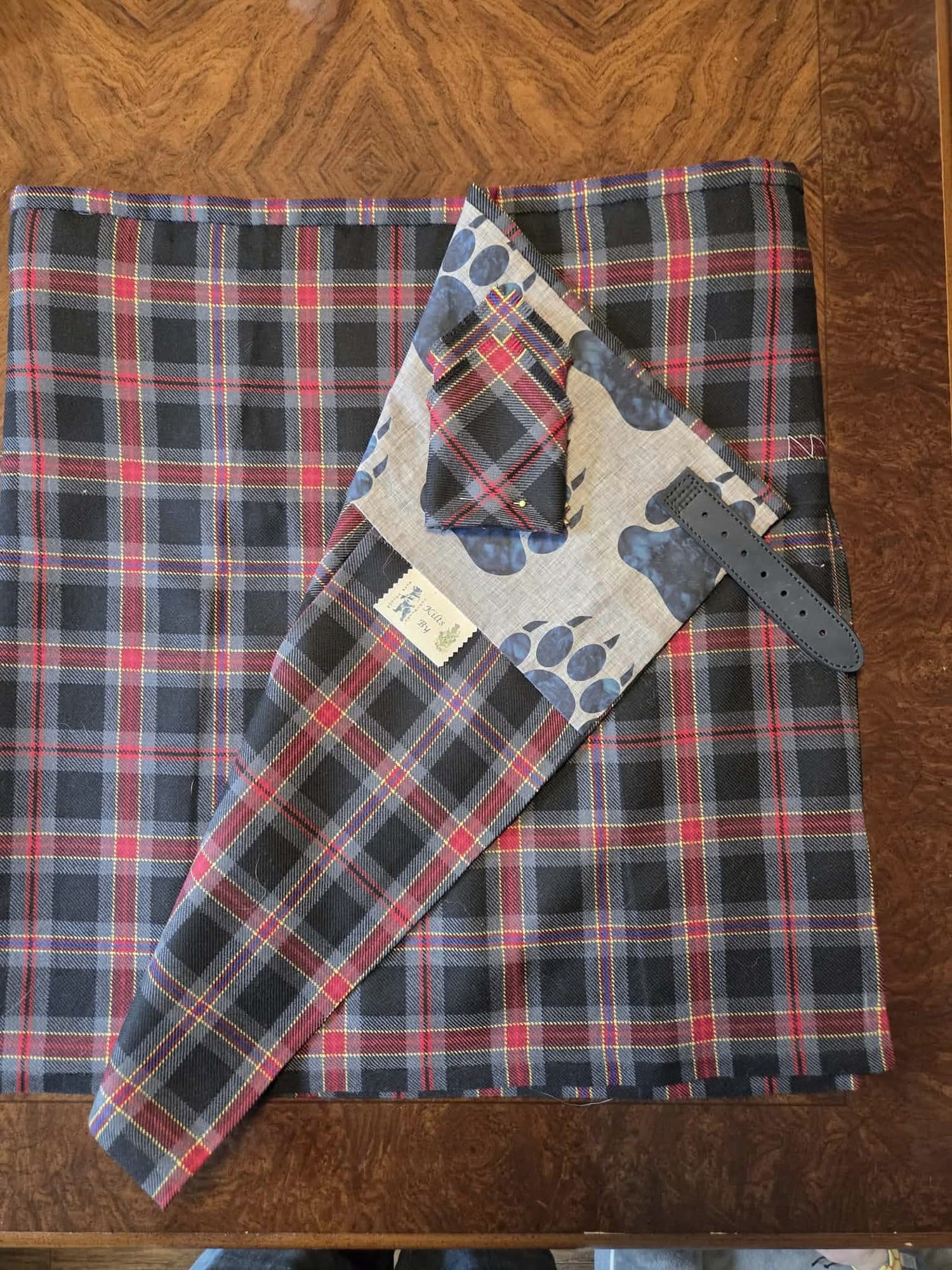
Bear Hollow is built on that reasoning. Cloth is woven at the British mills because those mills genuinely are the best in the world at it, and there is no reason to look elsewhere for that part. Everything after the cloth is decided on the merits.
Kilts are box pleated because the older construction hangs better and uses its yardage more honestly. Every commission begins with a video call because a man's measurements are his own and a size chart is a guess dressed as a standard. Setts are offered as a short, considered list rather than a surname lookup, and any sett the mills weave can be ordered in, including the many that have no clan attached to them at all.
And nobody here will tell a customer that his ancestry obliges him to a pattern. He gets to choose it because he wants it, the same way the men who wore these garments always did.
The revival is real, it is happening on both sides of the water at once, and there has never been a better moment to have a garment made properly rather than approximately.
Bear Hollow Clothiers · August 2026
Begin a Commission