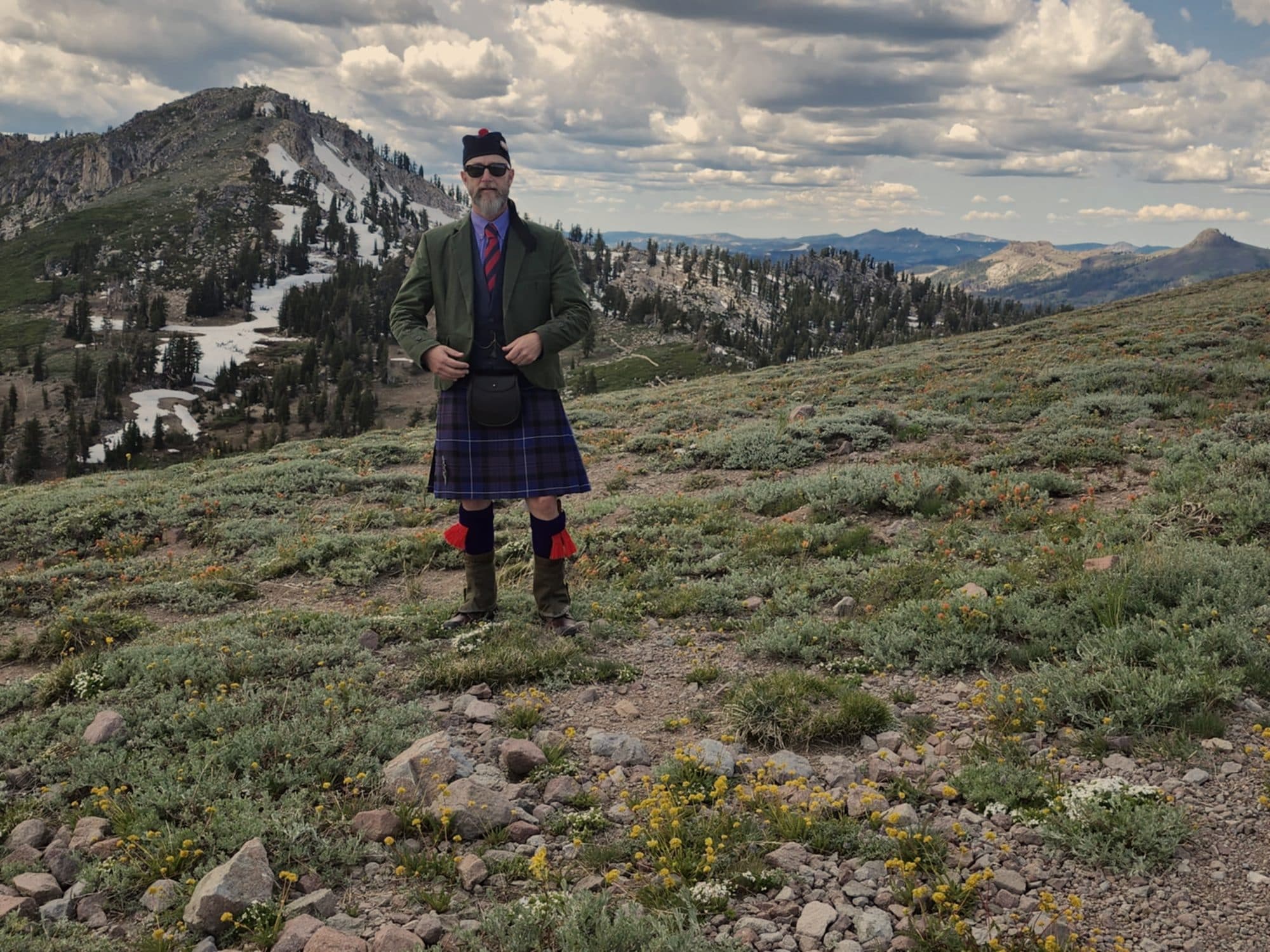
The Kilt Was Workwear
Long before it was ceremonial dress, the small kilt — the garment nearly everyone now means by the word — was cut for hard, physical Highland labor. It was practical clothing first, and that history is worth knowing.
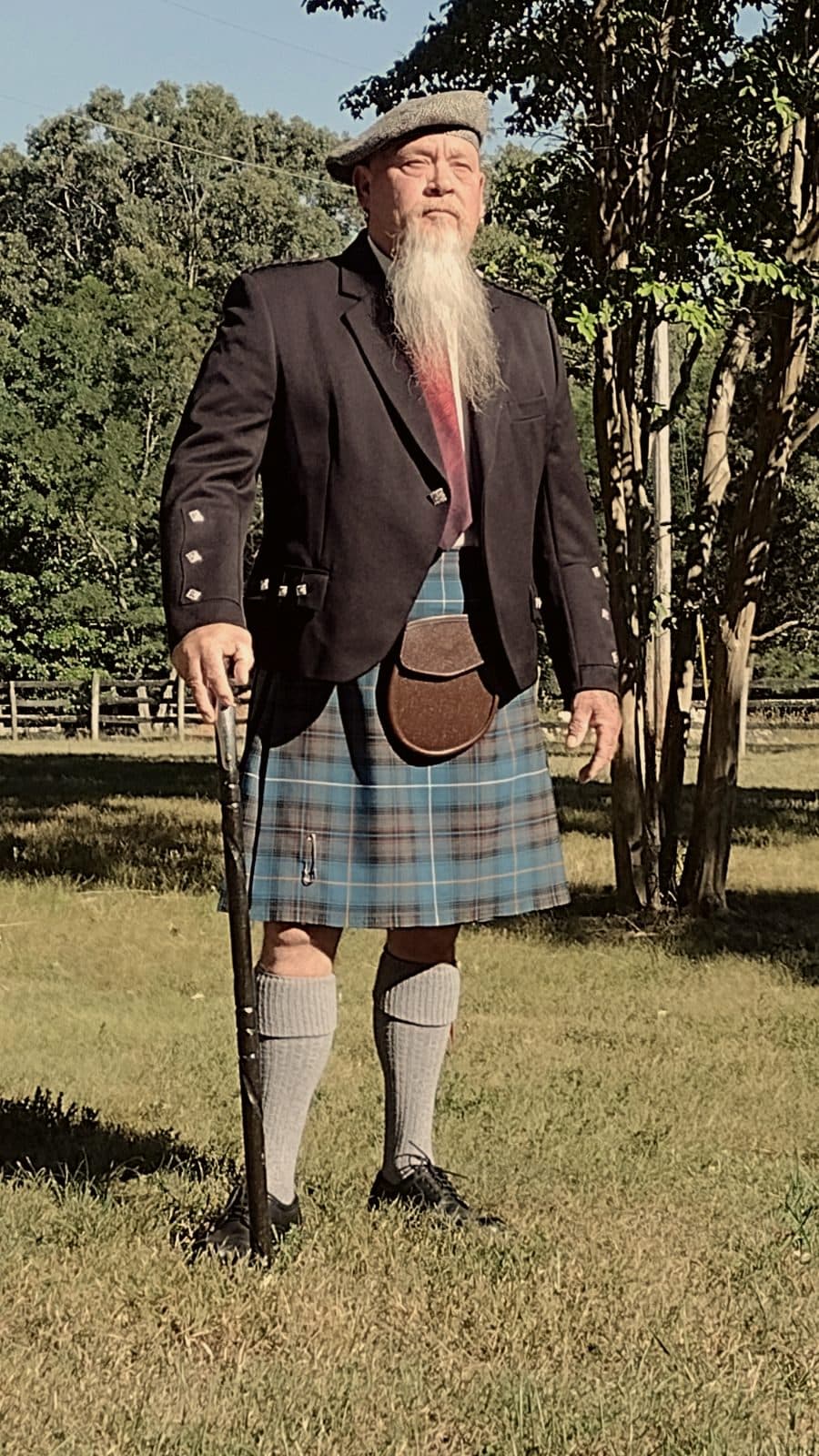
Most men meet the kilt as ceremonial dress — a garment for a wedding, a games, a homecoming. That is a fine way to meet it. It is also, historically speaking, the second act. The small kilt worn today began its life as working clothes, cut for men doing hard physical labor in the Highlands, and that origin is worth knowing before you ever put one on.
Cut for the job, not the occasion
The belted plaid that came before it — a long length of cloth gathered and belted at the waist, with the excess thrown over the shoulder — was practical for a Highland life spent outdoors, but it was a lot of cloth to manage. As Highland men increasingly took up industrial and outdoor labor in the eighteenth century, a shorter, simpler version took hold: the lower half, already pleated and sewn, worn on its own. It kept the legs free to work and dropped the excess yardage that a laboring man had no use for.
That garment, not the older belted plaid, is what nearly everyone now means by the word kilt. It was built to be worked in before it was ever built to be admired.
What practicality actually demanded
Workwear tells you something a ceremonial garment never has to: what actually matters when a man is moving, bending, and working outdoors in it all day. The pleating had to hold its shape through motion, not just a photograph. The cloth had to survive weather and wear. The fit had to allow a full stride, not just a good silhouette standing still.
Those constraints are still the best argument for how a kilt ought to be made. A garment that was designed to work is a garment that was designed honestly — every choice earns its place, because there was no room for a choice that only looked good.
From the job site to the ceremony
Highland dress moved from work to occasion gradually, alongside the same nineteenth-century revival that reshaped so much of the tradition — Highland regiments, a resurgence of national pride, and eventually a wardrobe reserved for the days that mattered rather than the fields. That is a natural path for working clothes to take. Denim did the same thing a century later.
The specific man credited with inventing the small kilt is often named with more confidence than the record actually supports. The change was real and the timing is well established; who deserves sole credit for it is not, so it is left out here rather than repeated as settled fact.
What survived the move from labor to ceremony was the construction, not just the silhouette. A kilt still built the way working men needed it built will always fit and wear better than one built only to be photographed.
A garment that was designed to work is a garment that was designed honestly.
What Bear Hollow keeps from that history
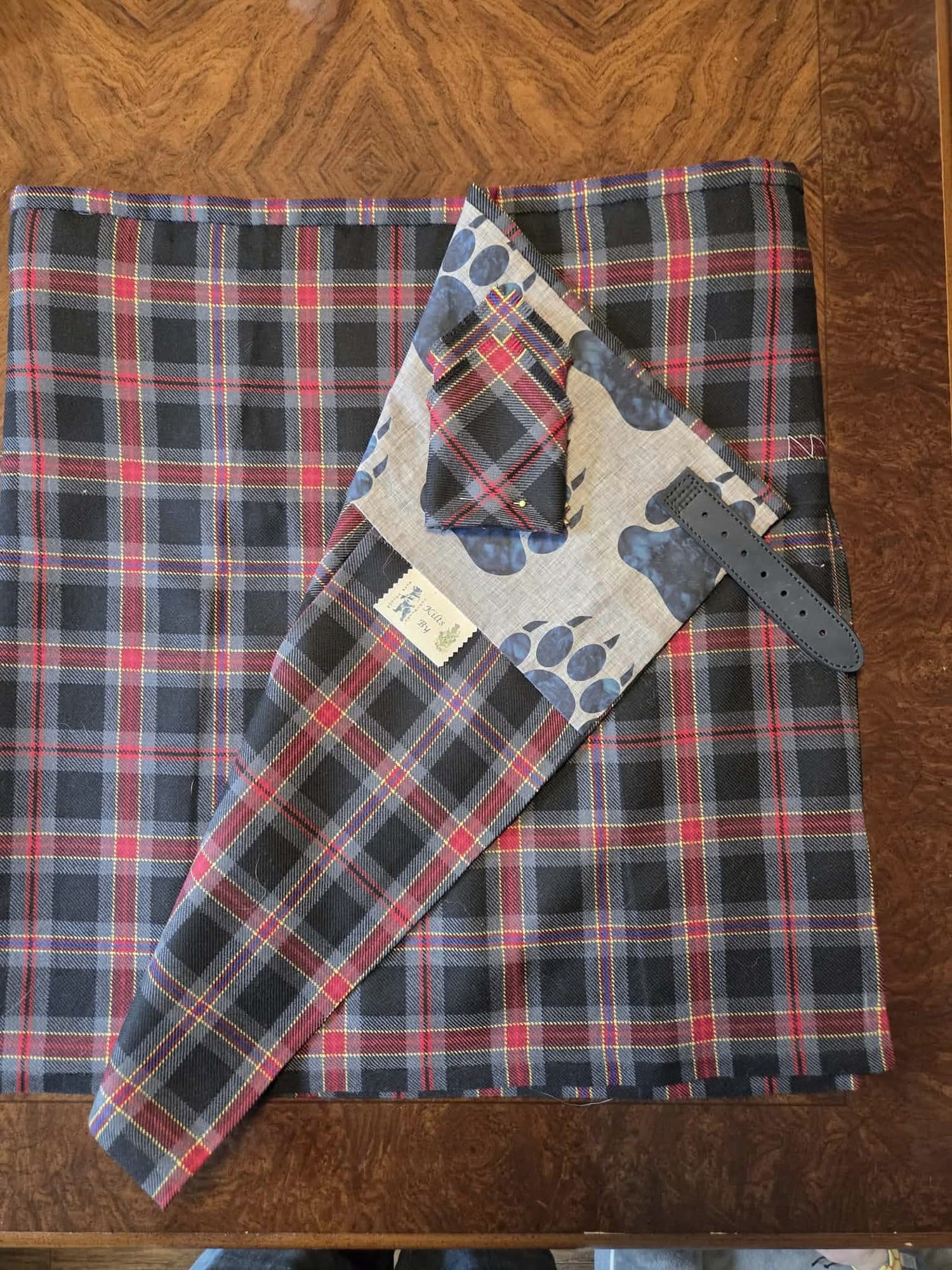
Bear Hollow box pleats every kilt for the same reason the original garment held together under real work: the older construction hangs with more swing and uses its yardage more honestly than the knife pleat that came later. The cloth is a proper worsted wool, heavy enough to hold its shape and move the way a kilt is meant to move. None of it is decoration. Every part of it is there because a working garment once needed it to be.
A kilt made properly today owes more to the men who wore it for labor than to any occasion it has been worn for since. That is not a lesser inheritance. It is the most honest one there is.
Bear Hollow Clothiers · June 2026
Begin a Commission